Provisional Newlyn
Site-specific residency commission project for Newlyn Art Gallery, Cornwall May – July 2006
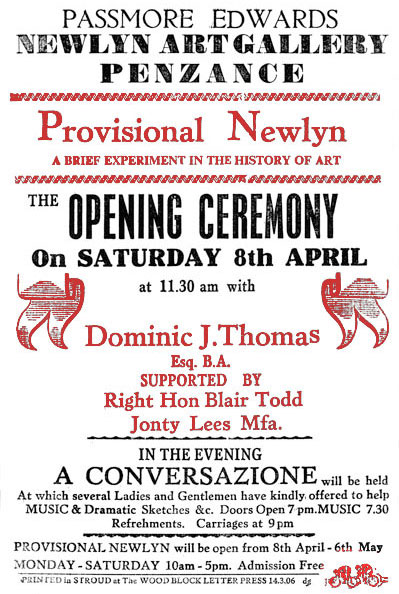
The art gallery at Newlyn opened in October 1895, one of the first purpose-built art galleries in the country. It had been built for a group, or colony of artists known as the Newlyn School, who had gained a certain reputation for their innovative en plein air style of painting from life.
It had been commissioned by Cornish-born newspaper proprietor and philanthropist Passmore Edwards, who had also been responsible for the building of the South London Gallery, and later the Whitechapel Picture Gallery. In a speech given during the opening luncheon, the celebrated author and literary critic A.T. Quiller- Couch said ‘…[the guests] had come down to witness a testimony in solid stone and mortar to a brief experiment in the history of art.’ He went on to state that ‘…in art finality means death. Art lives by experiment and the pursuit of an idea.’ i
One hundred and eleven years of ideas and experiment later, the Newlyn Art Gallery – that had been the Passmore Edwards Art Gallery, the Opie Memorial Gallery, and the Newlyn Orion Galleries – closes for major redevelopment. The ‘testimony in stone and mortar’ is to be enhanced with steel and glass, creating a public gallery fit for the twenty first century. Now is a moment of transition in a history of continual change. But as the gallery closes, new openings appear. These are the vacant spaces of possibility – temporary and conditional, pending confirmation and validation – a Provisional Newlyn.
In the spring of 2004, I was invited to make a proposal for a project that would coincide with the closing of the gallery for planned building work. A plan was sketched out in discussion with the gallery director Elizabeth Knowles. The idea was to develop a project that could serve the need of the gallery to have a presence when it closed, and that would operate both as a ‘real’ information point for the gallery and as an artwork in its own right and true to my ‘conceptually sound but idiosyncratic working methods.’ ii I delivered a proposal for Provisional Newlyn in August 2004.
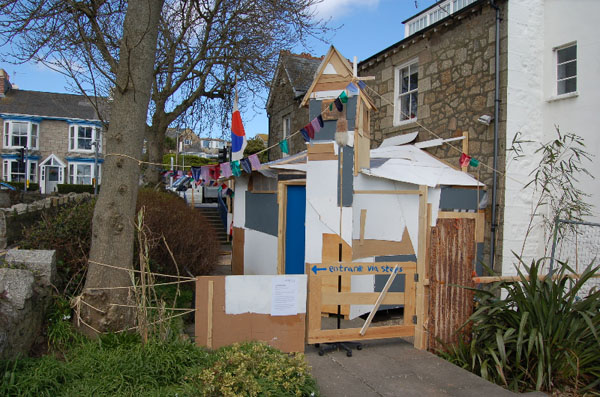
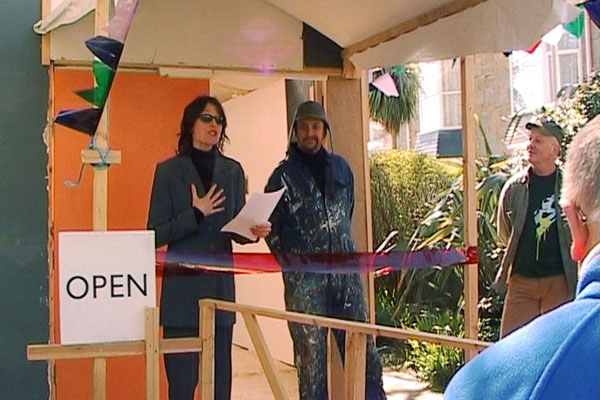
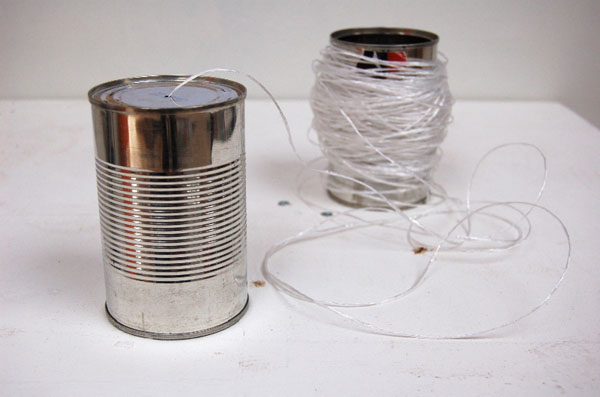
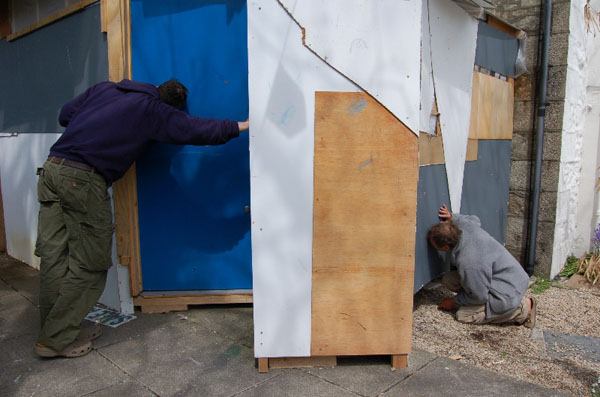
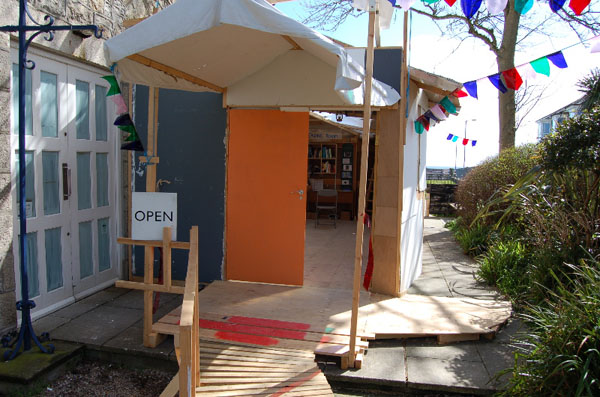
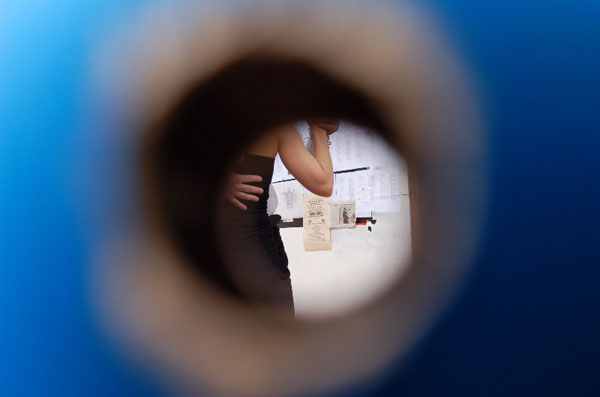
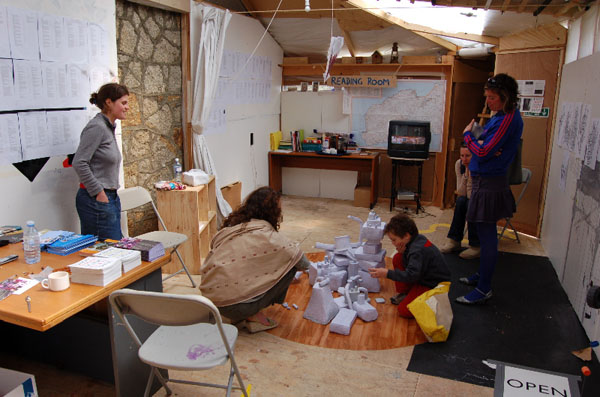
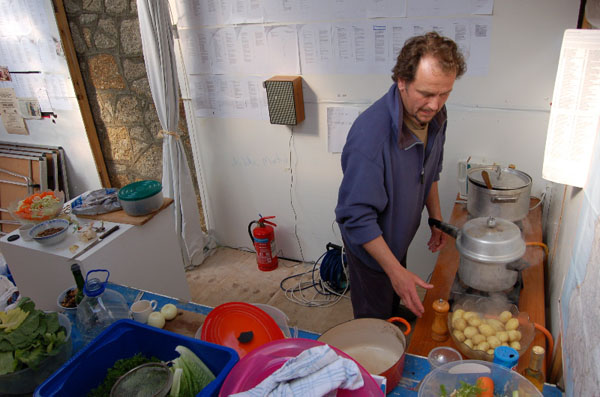
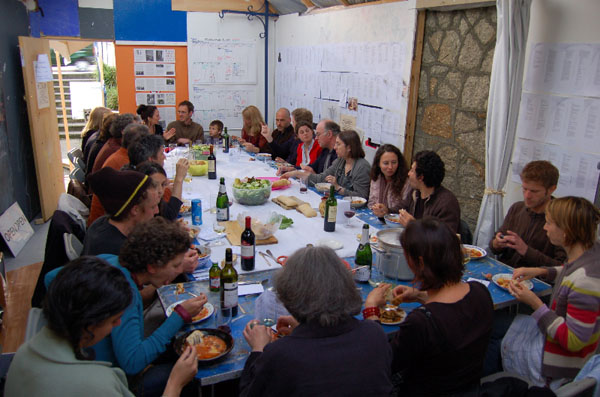
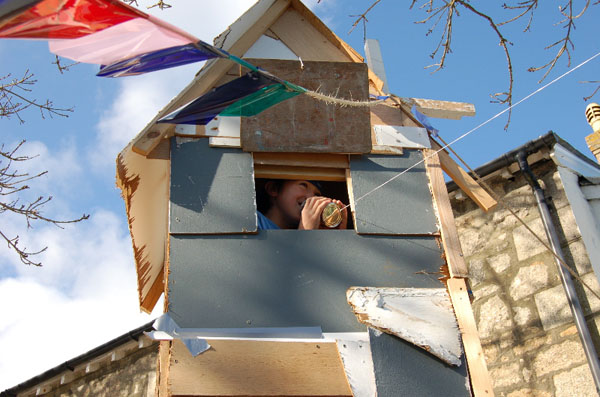
Provisional Newlyn will start from scratch, blithely re-priming the canvas of history with the left over emulsion of the recent past. Constructed from found and waste materials discarded in the process of Newlyn Gallery’s refurbishment, this hand made structure will be the antithesis of the planned development. It will be a ‘shanty gallery’, a vernacular monument to improvisation and making do.
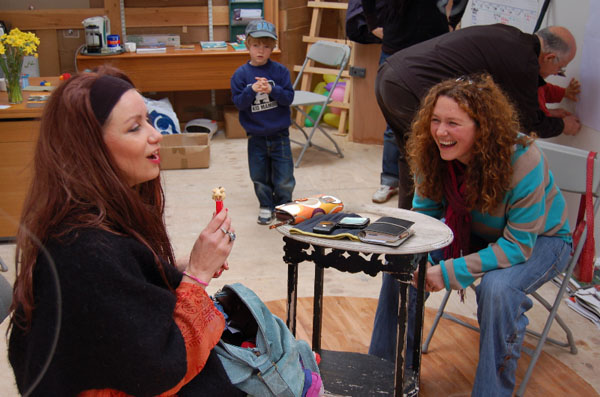
Throughout the duration of its installation, the provisional space will play host to a series of events, experiments and ideas. An open-ended programme is being developed in collaboration with other artists, gallery staff and visitors. Themes and lines of enquiry will be developed through a process of individual and collective interpretation of the site, the local context and selected materials from the historical archive of Newlyn Art Gallery. A new, momentary colony of ideas and connections will rise and fall on the shore of Mounts Bay.
Provisional Newlyn is a proposition that attempts to partially bridge this temporary interruption in the gallery’s long and illustrious history. It is an alternative temporary space, serving as a point of focus for the ‘missing’ institution while, at the same time, attempting to critique the idea of ‘the gallery’ itself. It is an improvised social-cultural space, a brief experiment in the history of the Passmore Edwards art gallery, reinventing the past, imagining the future and struggling with the indeterminate reality of the present. It is a place of potential, of possibilities, constantly changing and challenging ideas about what it is or should be. Questions will be asked. Answers may not be found.
D. Thomas, March 2006
i from The Cornishman, October 1895 in 100 Years in Newlyn, Diary of a Gallery, 1995, Ed. Melissa Hardie.
ii Elizabeth Knowles, Newlyn Art Gallery out-site programme proposal